EN
Quick Links
Which cars actually need a CANbus decoder, and which can run plug-and-play? For auto parts distributors and retail installers, this single question accounts for over 45% of pre-sale inquiries and post-sale return disputes. Here is how modern automotive electrical architectures communicate, and how a professional lighting factory diagnoses compatibility before installation.
During a technical consultation last month, a long-term automotive lighting distributor from Latin America raised a pressing operational question regarding a trial shipment of high-power LED headlight kits: "I have a crucial technical question regarding the CANbus system and decoders: How do I know which car models require an additional decoder, and which ones will work seamlessly without one?"
In the field, standard retail advice is often reactive: "Install the bulb first. If no dashboard alert triggers and the beam does not flicker, you do not need a decoder; if an alert illuminates or the light pulses, plug in an external decoder module." While this trial-and-error approach suffices for a DIY car owner in a private garage, it represents a costly liability for wholesale distributors. Recommending the wrong configuration leads to frustrated retail customers, unnecessary shipping returns, and eroded trust. Professional B2B importers require systematic, engineering-backed certainty before stock leaves the warehouse.
Modern passenger vehicles are equipped with sophisticated Controller Area Network (CANbus) microcomputers that continuously monitor electrical circuits. Understanding why an error occurs comes down to two electrical fundamentals:
• Current Draw & Resistance Discrepancy: A standard OEM halogen bulb draws approximately 55W of power, translating to roughly 4.2 to 4.5 Amperes of current draw. Because high-efficiency solid-state LEDs draw significantly less current for equivalent or superior optical output, the vehicle's Body Control Module (BCM) interprets the low amperage as a burned-out or missing bulb filament.
• Pulse Width Modulation (PWM) Scanning: European and modern North American vehicles transmit high-frequency electrical pulses to probe circuit integrity even when headlights are switched off. While an incandescent halogen filament is too thermally sluggish to react to these micro-pulses, fast-switching LED diodes respond instantly, producing visible strobe flickers or rapid fluttering.
The 3 Hallmark Symptoms of a CANbus Mismatch:
1. Immediate / Intermittent Strobe Flickering: The headlight pulses rapidly upon vehicle ignition or during daytime running light (DRL) operation.
2. Dashboard Warning Alerts: A yellow 'Bulb Out' indicator, check-light message, or high-beam indicator anomaly appears on the instrument cluster.
3. Automatic Circuit Shutdown (Thermal Protection Misfire): The headlight ignites perfectly for 5 to 15 minutes, but suddenly shuts off as the BCM detects an abnormal resistance curve and cuts power to protect the wiring harness.
Not all vehicles are created equal when it comes to electrical sensitivity. Based on over 15 years of OEM/ODM export data and rigorous bench testing, Redsea categorizes worldwide automotive platforms into three distinct CANbus sensitivity tiers:
| Sensitivity Tier | Representative Vehicle Brands | Sensitivity Level | Need Decoder? | Factory Recommendation |
| Tier 1: High Sensitivity | BMW, Mercedes-Benz, Audi, VW, Porsche, Volvo, Jeep, Dodge, RAM, Chrysler | Extremely Sensitive (95%+) | Mandatory | Equip Dedicated External Smart Decoder or R21 Smart IC Bulbs |
| Tier 2: Moderate Sensitivity | Ford (F-150 / Ranger), Chevrolet, GMC, Hyundai, Kia (newer platforms) | Moderate (35%–50%) | Recommended | Plug-and-play test; keep decoders in stock for high-trim models |
| Tier 3: Low Sensitivity | Toyota, Honda, Nissan, Mazda, Subaru, Mitsubishi, Suzuki, Lexus | Very Low (<5%) | Rarely Needed | Direct Plug-and-Play installation with zero error codes |
A reliable LED bulb should solve decoding problems on the circuit board, not through bulky external band-aids. Rather than relying on cheap external ceramic resistors that run blistering hot and pose melting hazards inside engine bays, Redsea optical and electrical engineers tackle CANbus compatibility through dual-tier architectural engineering:
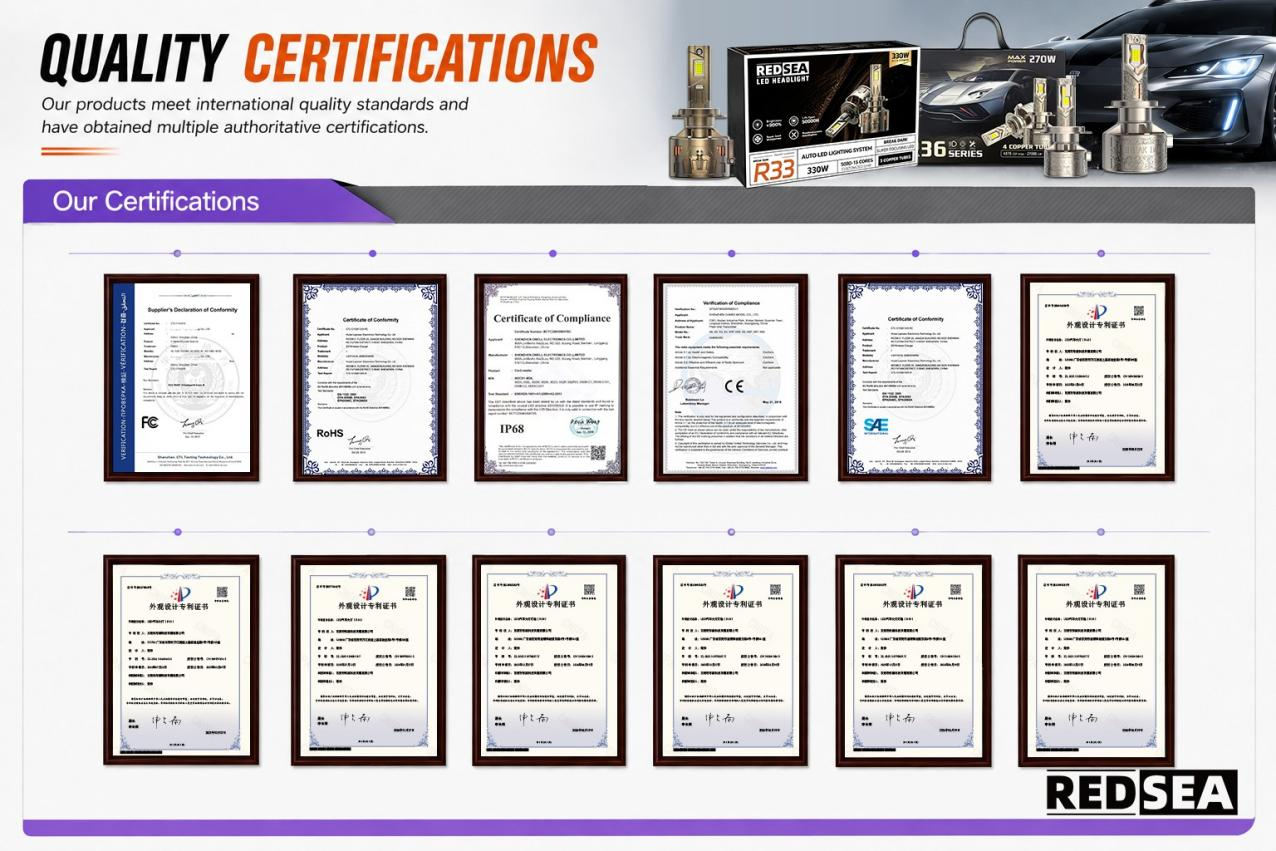
Figure 1: Redsea Quality Certifications — Precision EMC and CANbus driver compliance (CE, RoHS, FCC, ISO9001)
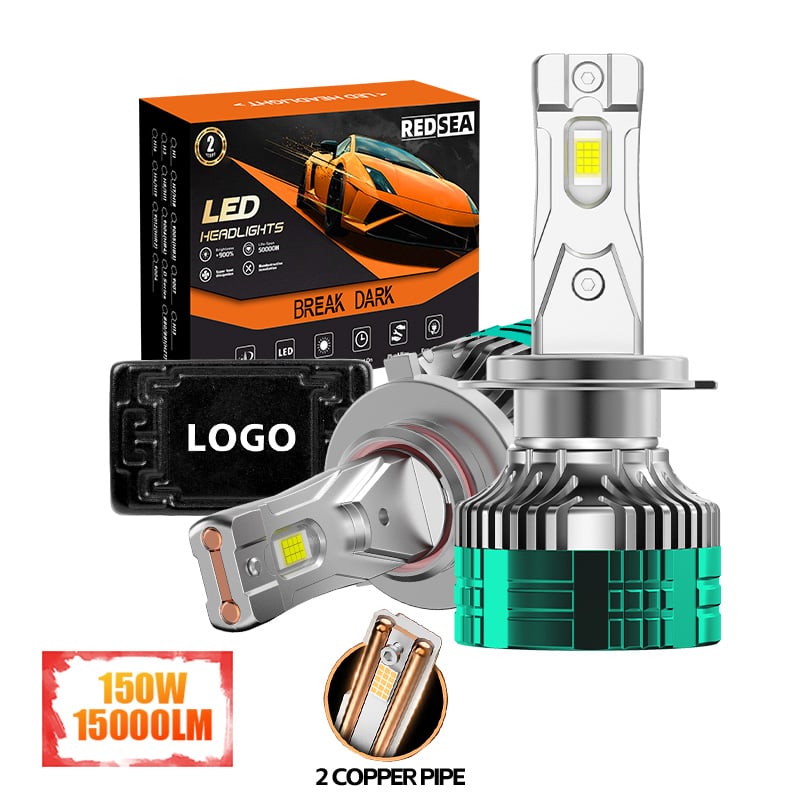
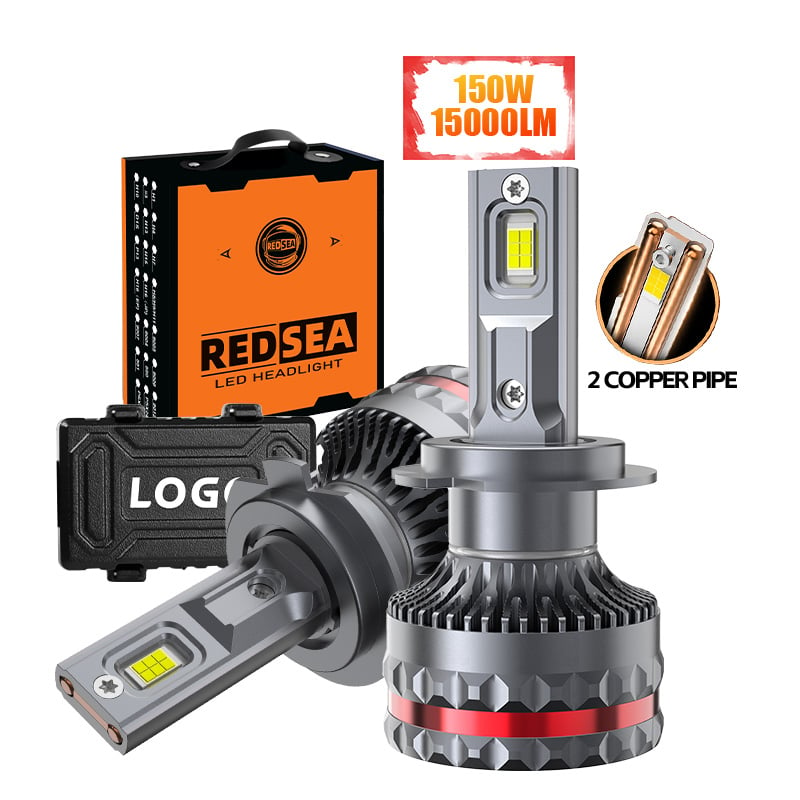
• Integrated Smart IC Drivers (R21 Series): For our flagship REDSEA R21 (150W, 15,000LM) and R20 series, our engineering team embeds a proprietary intelligent microprocessor directly into the aluminum bulb collar. This Smart IC dynamically absorbs reverse voltage spikes, emulates OEM electrical impedance curves, and neutralizes PWM pulses, resolving over 98% of vehicle computer alerts without any external accessories.
• Heavy-Duty Inductive Decoders (R33 High-Power Kits): For extreme high-output conversions such as the REDSEA R33 H7 (330W, 33,000LM), Redsea manufactures dedicated aerospace-grade aluminum decoders equipped with solid-state capacitors and shielded inductive coils. Unlike generic market decoders that simply waste energy as heat, our inductive modules maintain steady 12V–24V power filtration while keeping casing temperatures below 65°C.
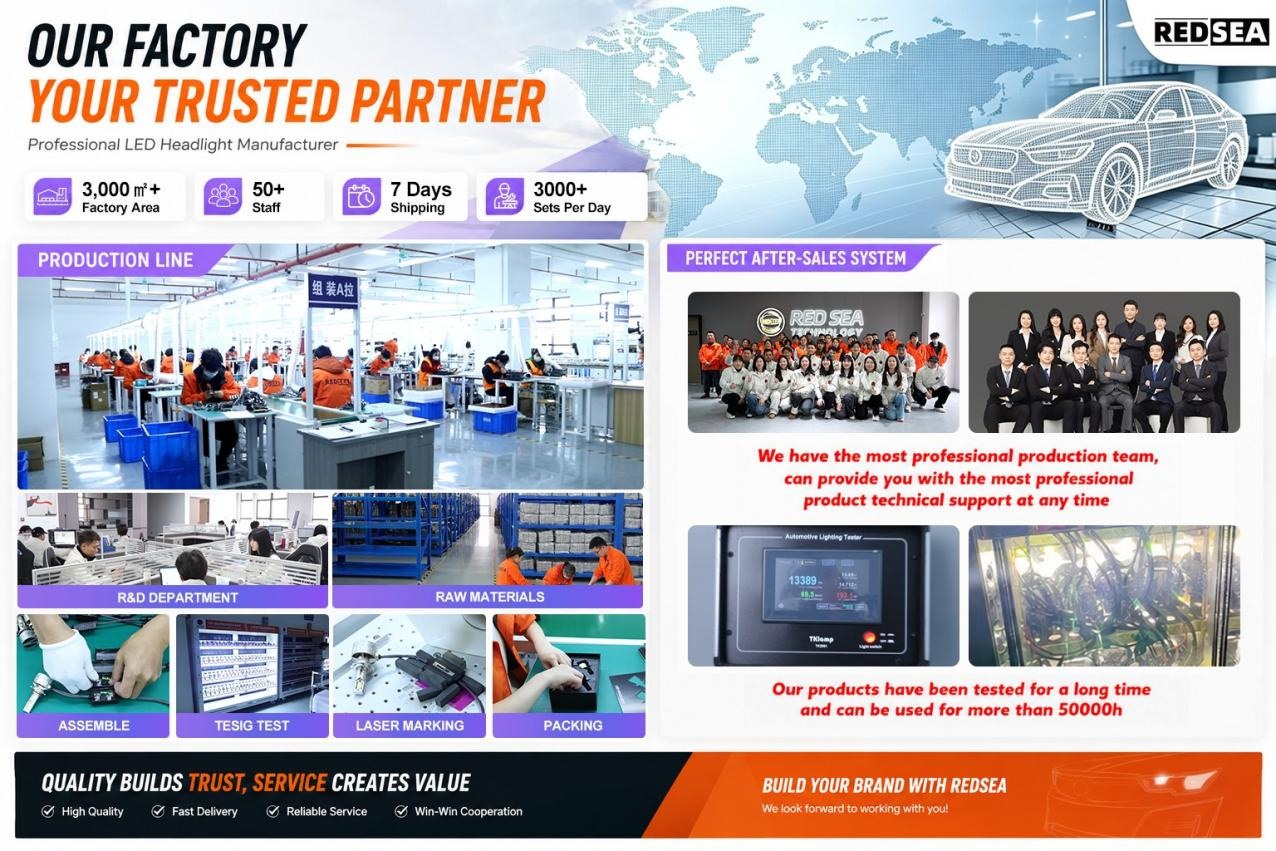
Figure 2: Redsea Modern Manufacturing Facility in Dongguan — 30,000㎡+ production facility with automated SMT driver assembly
By equipping overseas distributors with structured compatibility matrices and certified Smart IC hardware, Redsea transforms a technical headache into a lucrative commercial asset. Our partner in Latin America integrated this compatibility guide into their dealer ordering portal:
• Return Rate Plunge: Aftermarket return rates attributed to 'headlight flickering' or 'computer warning lights' dropped from 7.4% to under 0.4% within 90 days.
• Proactive Bundle Sales: Rather than selling bulbs alone, the distributor bundled Tier 1 vehicles (Jeep, RAM, VW, BMW) with Redsea OEM decoders at checkout, increasing average order value (AOV) by 18% with healthy 50%+ gross margins on accessory hardware.
• Enhanced Brand Equity: Retail mechanics and installation shops recognized the brand as a dependable technical partner, securing recurring wholesale replenishment orders quarter after quarter.
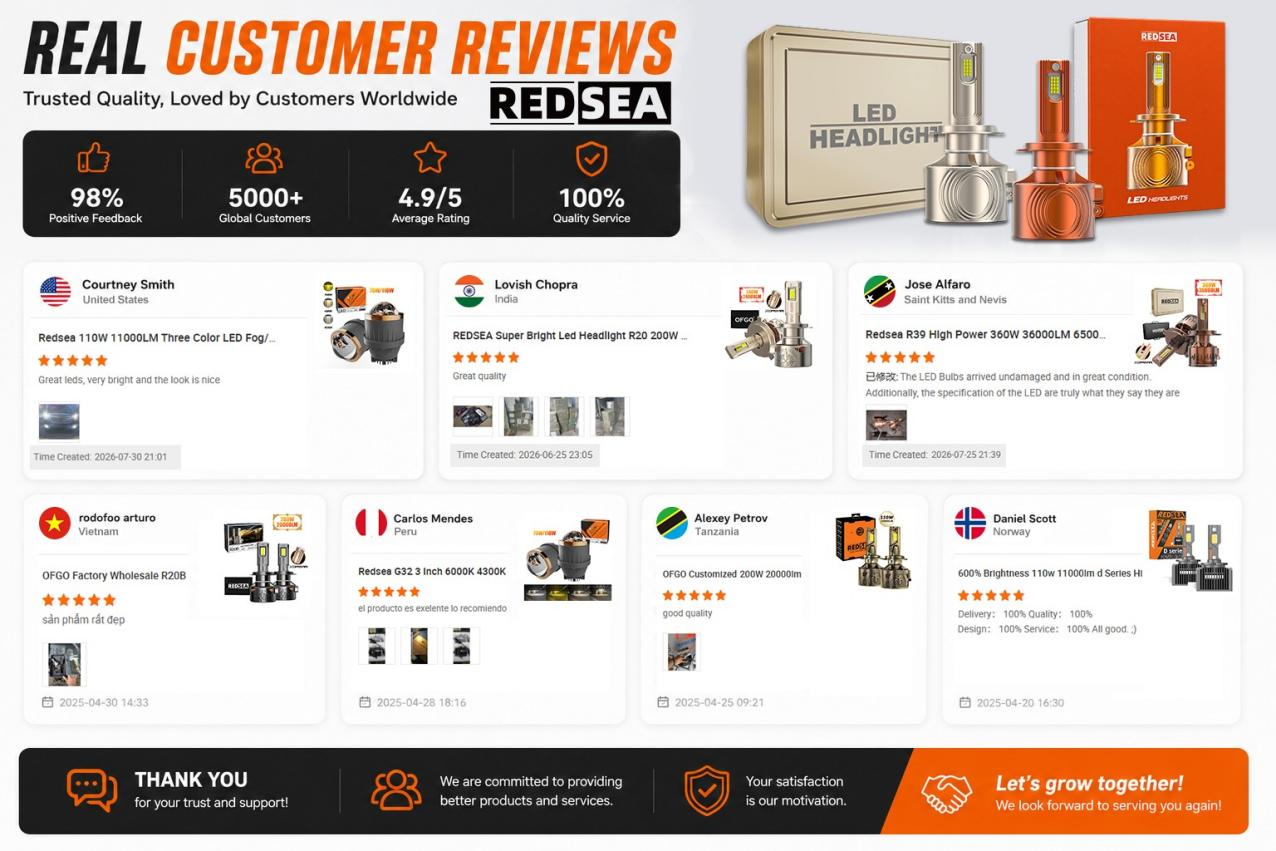
Figure 3: Real Customer Reviews from Worldwide Distributors — Proven decoding reliability across global automotive markets
|
Upgrade Your Automotive Lighting with Redsea: • Official Website: www.redseaheadlight.com • Business Email: [email protected] • Factory Address: Room 501, Building 1, No. 8 Chuangyi East Road, Daojiao Town, Dongguan City, Guangdong Province, China (Postal: 523000) • Direct Factory Consultation: Inquire today for bulk wholesale pricing, custom CANbus driver engineering, and OEM/ODM private-label distribution. |
Copyright © 2026 Redsea. All rights reserved.

Dongguan Red Sea Technology Development Co., Ltd. provides premium LED car headlights, BI-LED & laser lenses for global automotive brands. 15+ years OEM/ODM expertise, strict QC, 2000+ distributors. Contact us today!
Room 501, Building 1, No. 8 Chuangyi East Road, Daojiao Town, Dongguan City, Guangdong Province,523000
Copyright © 2026 by Dongguan Red Sea Technology Development Co., Ltd. Privacy Policy

 Hot News