EN
Quick Links
Executive Summary: Unmasking the physics of thermal resistance, how excessive junction temperature (Tj > 150°C) triggers rapid lumen depreciation, and why vacuum copper heat pipes outperform generic solid aluminum heatsinks.
Consumer marketing for automotive LED lighting frequently promises astronomical figures: '50,000 Hours Lifespan!' and '30,000 Lumens Output!'. Yet, customer review data reveals a starkly different reality: premature burnout and short lifespan (13%), poor heat dissipation (3%), and exaggerated lumen claims that underperform stock halogens (12%) combine to account for over 28% of all buyer dissatisfaction. Why do so many aftermarket LED bulbs fail within months, and why do they dim dramatically after only a few minutes of driving?
To understand LED degradation, one must understand how LEDs differ from traditional bulbs. A halogen bulb is a heat-resistant thermal emitter: approximately 80% of its energy is radiated forward as harmless infrared heat through the front glass lens. An LED, conversely, is a cold-beam solid-state emitter. It emits zero forward infrared radiation; instead, roughly 65% to 70% of its electrical power is converted directly into conduction heat at the microscopic semiconductor junction.
If this thermal energy is not evacuated instantly, the diode junction temperature (Tj) rapidly exceeds its safe operational threshold of 130°C to 150°C. Excessive junction heat causes exponential degradation: the yellow phosphor coating discolors, internal bonding wires experience thermal fatigue and snap, and the silicone encapsulation hardens and cracks, leading to total diode failure within a few hundred hours.
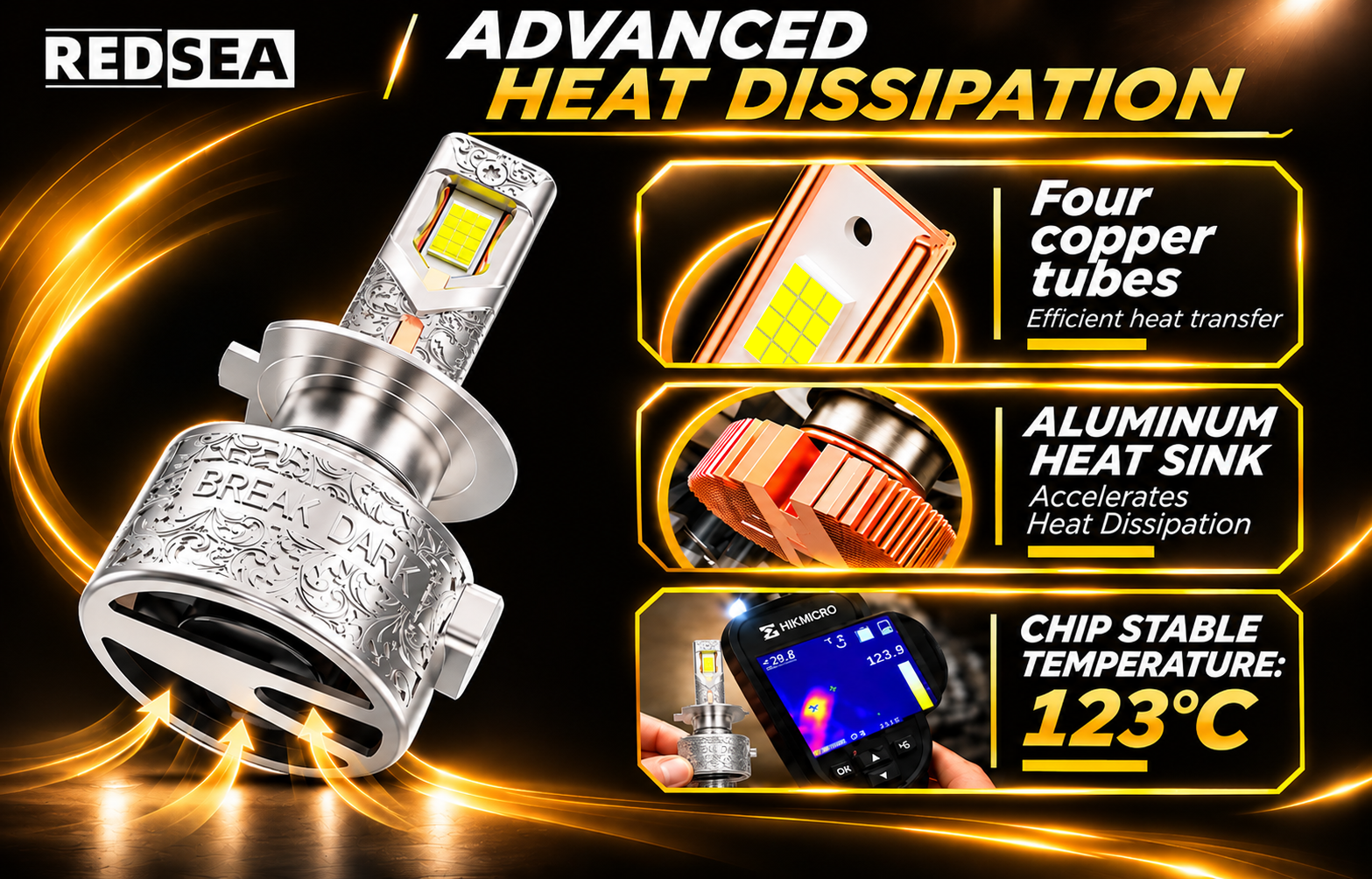
Figure 1: Thermal Dissipation Dynamics: Copper Heat Pipes, Aluminum Fins, and Active Fan Cooling System.
Why do many buyers complain that their 'ultra-bright' 20,000-lumen LED bulbs appear dimmer than factory halogens on the open highway? This occurs due to a well-known phenomenon called Thermal Droop.
Disreputable manufacturers measure luminous output in laboratory integrating spheres at turn-on (at 0.1 seconds, while the diode is at a cool 25°C). However, once sealed inside a car's headlamp enclosure on a warm night, the internal ambient temperature quickly reaches 80°C. Without robust thermal dissipation, the bulb's thermal throttling circuitry automatically slashes driving current by 40% to 60% to prevent self-destruction. The bulb that delivered an impressive burst of light in the driveway drops to a lackluster, washed-out glow after 15 minutes of nighttime driving.
Building an automotive LED headlight bulb capable of truly surviving 30,000 to 50,000 operational hours requires an uncompromising thermal conduction path:
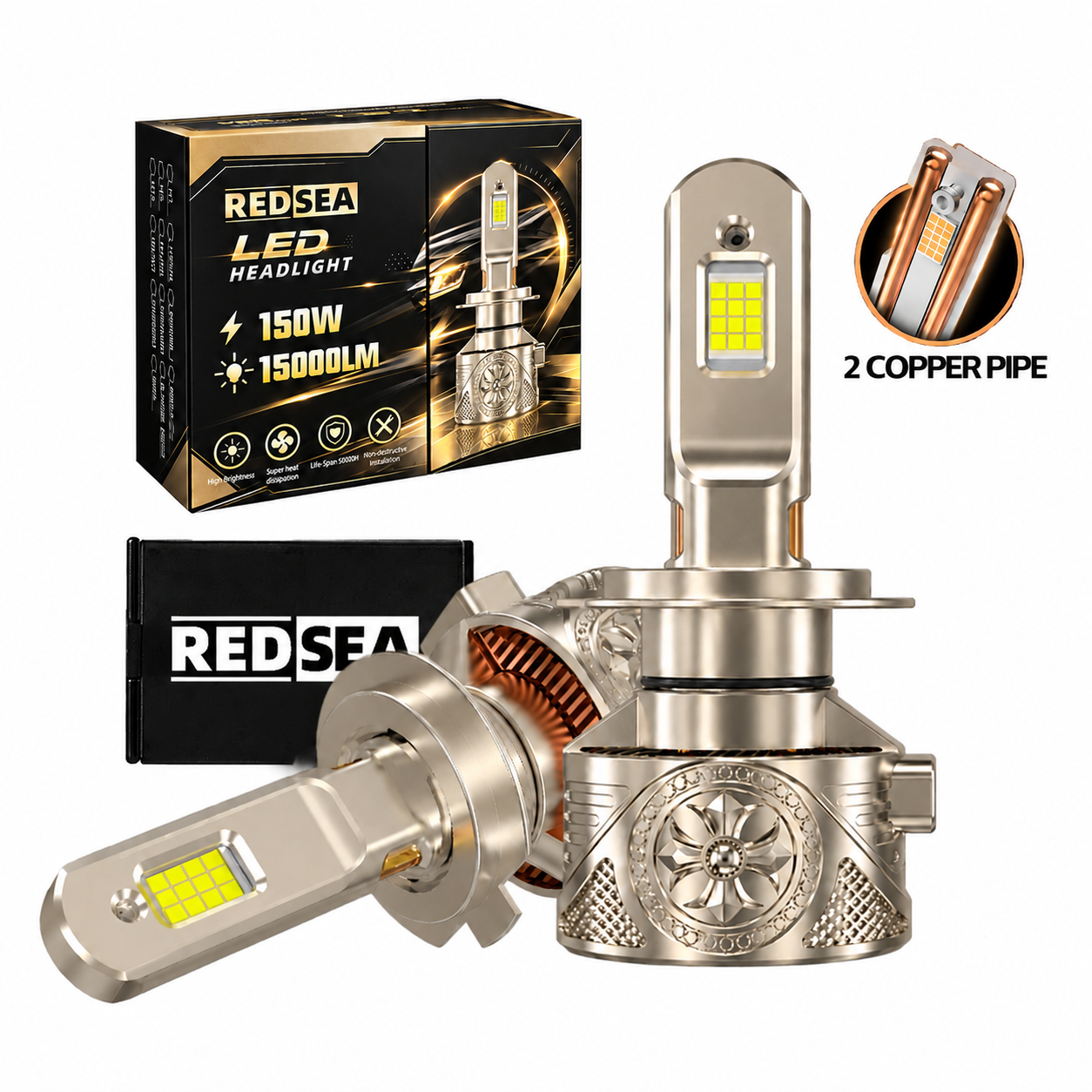
• Sintered Vacuum Copper Heat Pipes: Generic solid aluminum heatsinks possess a thermal conductivity of roughly 150 to 200 W/m·K — far too slow to evacuate heat from a 40W+ high-density CSP chip. State-of-the-art bulbs embed sintered pure copper vacuum heat pipes (exceeding 10,000 W/m·K equivalent conductivity) directly beneath the copper PCB, transferring heat to the rear fins in milliseconds via phase-change evaporation and condensation cycles.
• Ultra-Thin Double-Sided Copper Substrates: A pure red copper substrate transfers heat up to twice as efficiently as cheap aluminum boards, keeping junction temperatures well below the 110°C critical ceiling.
• Active High-Speed Hydraulic Fans: While fanless bulbs rely on passive ambient cooling, they are severely power-limited (rarely exceeding 20W without overheating). High-output bulbs require active hydraulic or dual-ball-bearing fans spinning at 10,000 to 12,000 RPM to sustain continuous forced convection inside sealed enclosures.
• Intelligent Dynamic Temperature Control (NTC): Quality LED drivers incorporate Negative Temperature Coefficient (NTC) thermistors that monitor diode temperatures millisecond by millisecond, modulating driving current smoothly and imperceptibly to ensure lifelong reliability without abrupt lumen crashes.
Lifespan and true usable lumens are dictated entirely by thermal management. While marketing claims may focus on cold-start output, real-world longevity demands active vacuum copper heat pipes, red copper substrates, and reliable forced-air convection. Investing in verified thermal engineering is the only reliable defense against premature burnout and lumen collapse.

Dongguan Red Sea Technology Development Co., Ltd. provides premium LED car headlights, BI-LED & laser lenses for global automotive brands. 15+ years OEM/ODM expertise, strict QC, 2000+ distributors. Contact us today!
Room 501, Building 1, No. 8 Chuangyi East Road, Daojiao Town, Dongguan City, Guangdong Province,523000
Copyright © 2026 by Dongguan Red Sea Technology Development Co., Ltd. Privacy Policy


 Hot News