 EN
EN
Lumens and Brightness: Why More Isn‘t Always Safer
When searching for the best led head lights, lumen output is often the first specification that catches drivers‘ attention. Higher lumen numbers certainly sound impressive, but real-world night driving safety depends on more than raw brightness. In my experience retrofitting dozens of vehicles, I’ve seen drivers spend extra money on extremely high-lumen bulbs only to discover they cause excessive glare and scattered light that actually reduces usable visibility.
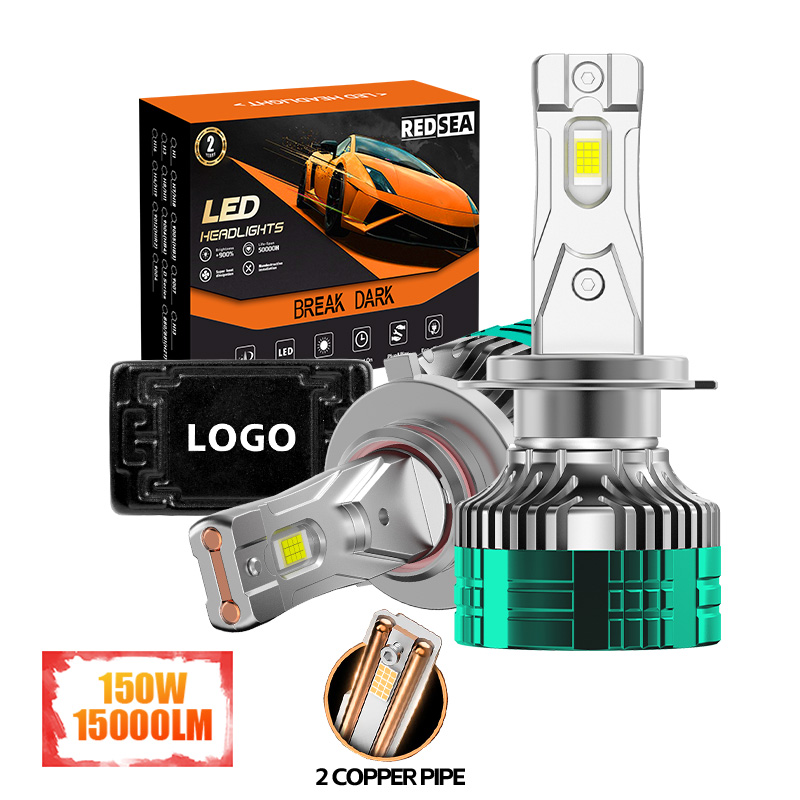
The Red Sea R45 LED headlight delivers 20,000 lumens per pair at 200W of power, using 4070 CSP flip-chip technology. This level of brightness provides excellent road illumination without pushing into the dangerously over-bright territory that some aftermarket bulbs occupy. Research has shown that approximately 35% of LED headlight systems exceed safe glare thresholds, creating genuine safety hazards for oncoming drivers. A properly engineered beam pattern at reasonable intensity is far safer than an overpowered light that blinds other road users. When evaluating the best led head lights, prioritize balanced optical design over chasing the highest lumen count.
Color Temperature: Finding the Sweet Spot for Visibility and Comfort
Color temperature, measured in Kelvin, directly affects how clearly you see road markings, obstacles, and pedestrians at night. The Red Sea R45 produces a crisp 6500K cool white beam that helps edges and road signs stand out against dark backgrounds. This color temperature sits in the range that many drivers find optimal for night driving, as it mimics daylight conditions and reduces eye strain during extended trips.
However, color temperature alone doesn‘t tell the full story. The Color Rendering Index (CRI) measures how faithfully a light source reveals the true colors of objects. Automotive LEDs for driving beams should aim for CRI of at least 80, with demanding applications benefiting from CRI near 90 for clearer distinction of soil, fluids, and safety markings. While halogen bulbs achieve near-perfect 100 CRI, they produce much lower luminous flux. Modern LEDs balance these trade-offs effectively. When selecting the best led head lights, look for products that specify both Kelvin rating and demonstrate good color rendering—your ability to distinguish a wet patch from dry pavement at highway speeds may depend on it.
Beam Pattern and Glare Control: The Safety Factor No One Should Ignore
A poorly designed beam pattern compromises safety for everyone on the road. The Red Sea R45 features an ultra-focused beam pattern design that puts light precisely where you need it—on the road ahead—while minimizing scatter upward and to the sides. This design approach directly addresses the glare problem that has become increasingly common with aftermarket LED upgrades.
Dr. Marcus Chen, lead researcher at the Institute for Vehicle Optical Safety, notes that excessive brightness without proper beam control creates measurable safety hazards. LEDs actually allow engineers to design precise low-beam patterns with an “anti-glare notch” that illuminates the road while reducing glare for oncoming drivers. The study also advises against using LED sources in reflector headlight housings designed for halogen bulbs, recommending projector headlights for optimal LED performance. For drivers seeking the best led head lights, ensuring compatibility with your vehicle’s housing type is just as important as the bulb’s specifications.
Thermal Management: Keeping Your Lights Bright for the Long Haul
LED performance degrades significantly when heat isn‘t properly managed. The Red Sea R45 addresses this challenge with a sophisticated three-copper-tube cooling system paired with a quiet cooling fan. This combination efficiently draws heat away from the LED chips, maintaining stable brightness even during extended night driving sessions.
Industry testing has confirmed that effective thermal management directly extends LED lifespan and prevents premature lumen depreciation. The R45’s aviation-grade aluminum body and 8500RPM cooling fan work together to keep operating temperatures within safe ranges. Without proper heat dissipation, LED bulbs can experience rapid light output reduction, often dropping significantly below their rated lumens within the first year of use. When comparing the best led head lights, examine the cooling system design—copper heat pipes, aluminum heat sinks, and active fan cooling all indicate quality engineering that will deliver consistent performance over thousands of hours.
Durability and Weather Protection: Built for Real-World Conditions
Night driving doesn‘t pause for rain, snow, or dust storms. The Red Sea R45 carries an IP68 waterproof rating, meaning it is completely protected against dust ingress and can withstand continuous immersion in water. This level of environmental sealing ensures reliable operation regardless of weather conditions—a critical consideration for drivers who commute in all seasons.
The CE, RoHS, and FCC certifications on Red Sea products demonstrate compliance with international safety and environmental standards. IP68 certification has become the gold standard for automotive LED headlights, as it guarantees protection against the harshest environmental conditions. When evaluating the best led head lights, verify the IP rating. Lower ratings like IP65 or IP67 offer reasonable protection, but IP68 provides the ultimate peace of mind for drivers who face heavy rain, deep puddles, or frequent car washes. The aviation aluminum construction used in quality LED headlights also resists corrosion and physical impact, further extending service life.
Installation Compatibility and Vehicle Fitment
The best led head lights in terms of performance are useless if they don‘t fit your vehicle. The Red Sea R45 is designed with a miniaturized, 1:1 form factor that matches original halogen bulb dimensions. This design ensures proper fitment within factory housings without requiring modifications, cutting, or special adapters.
Compatibility extends beyond physical dimensions. Modern vehicles use computerized CANbus systems that monitor electrical loads. LED bulbs draw significantly less power than halogen bulbs, which can trigger dashboard error warnings. The R45 includes built-in CANbus compatibility that works with 98% of vehicles, preventing error codes and flickering issues. For the remaining 2%, external decoders are available. The R45 fits a comprehensive range of socket types including H4, H1, H3, H7, H11, 9005, 9006, and 9012, covering most sedans, SUVs, trucks, and motorcycles. Before purchasing, verify your vehicle’s bulb size and confirm CANbus requirements for a truly plug-and-play installation.
Industry Certifications: Your Assurance of Safety and Legality
Regulatory certifications provide objective verification that LED headlights meet safety and performance standards. The Red Sea R45 carries CE, RoHS, and FCC certifications, demonstrating compliance with European safety standards, environmental regulations, and U.S. electromagnetic compatibility requirements.
The U.S. Department of Transportation (DOT) and SAE standards specify beam pattern, brightness, and mounting angle requirements for road-legal lighting. European ECE R112 standards place additional emphasis on beam shape and anti-glare performance. Understanding these standards helps drivers make informed choices. The best led head lights for your region will carry appropriate certifications. Uncertified products may face recall or bans in mainstream markets. Red Sea’s commitment to obtaining these certifications reflects a manufacturing approach that prioritizes road safety and regulatory compliance alongside performance, giving drivers confidence that their lighting upgrade is both legal and safe.
Table of Contents
- Lumens and Brightness: Why More Isn‘t Always Safer
- Color Temperature: Finding the Sweet Spot for Visibility and Comfort
- Beam Pattern and Glare Control: The Safety Factor No One Should Ignore
- Thermal Management: Keeping Your Lights Bright for the Long Haul
- Durability and Weather Protection: Built for Real-World Conditions
- Installation Compatibility and Vehicle Fitment
- Industry Certifications: Your Assurance of Safety and Legality