
 EN
EN
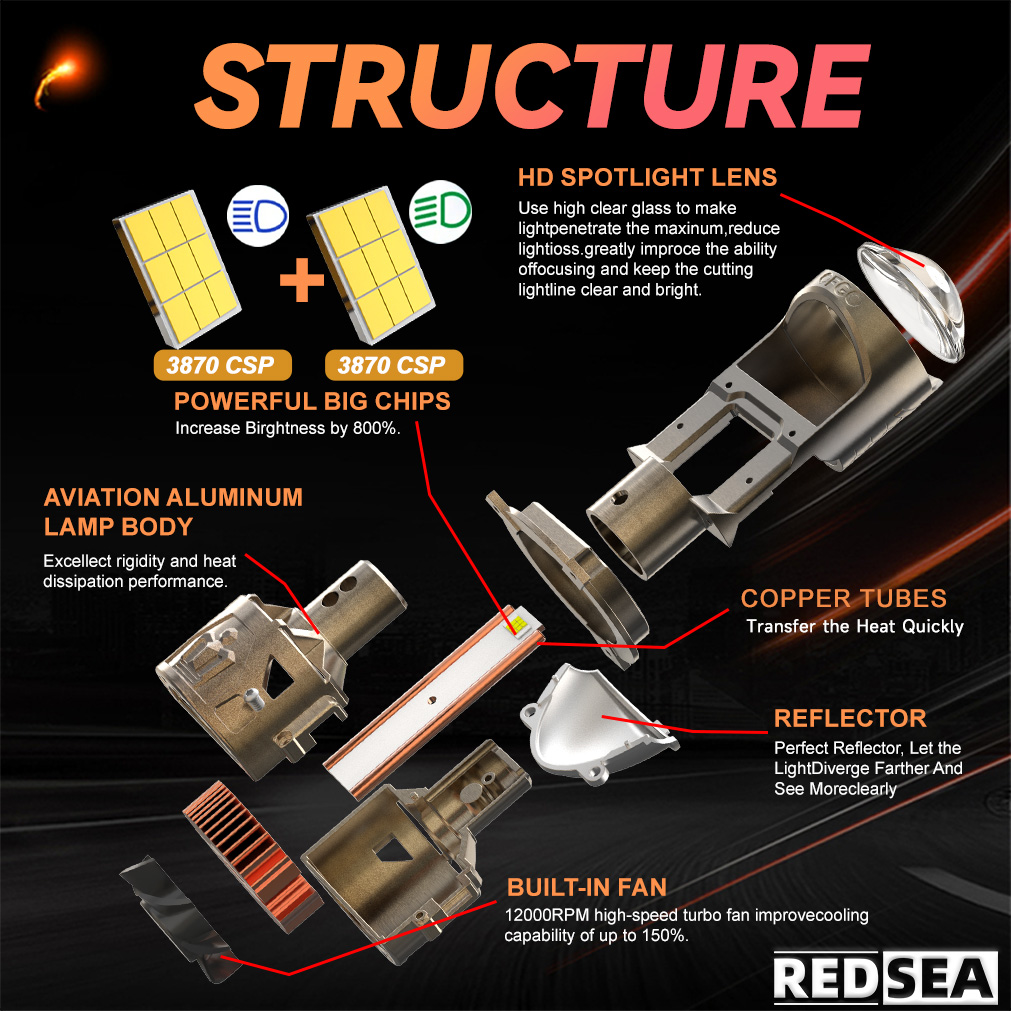
Understanding the H4 LED Canbus Concept and Why It Matters for Older Vehicles
The question of whether H4 LED Canbus bulbs function properly in older vehicle models is one that fleet managers, workshop technicians, and individual vehicle owners frequently raise. The term "Canbus" in the context of LED headlight bulbs refers to a built-in decoder or load resistor module designed to prevent dashboard error messages, hyperflashing, or flickering caused by the vehicle's electrical monitoring system. The H4 socket, a dual-beam configuration combining high beam and low beam in a single bulb, is one of the most widely used headlight interfaces across vehicles manufactured from the 1980s through the present. Understanding whether an H4 LED Canbus bulb will work correctly in a specific older vehicle requires examining the vehicle's electrical architecture, the bulb's decoder design, and the physical compatibility of the LED replacement.
How CAN Bus Systems Detect Bulb Failures and Why LED Bulbs Trigger Errors
The Controller Area Network (CAN bus) is a serial communication protocol that allows various electronic control units (ECUs) in a vehicle to share data. One function of this system is lamp monitoring: the body control module or lighting ECU measures the current draw of each headlight circuit. A standard halogen H4 bulb draws approximately 55 watts on low beam and 60 watts on high beam, presenting a specific resistance value to the system. When a vehicle owner replaces the halogen bulb with an H4 LED Canbus equivalent, the LED typically draws only 25 to 40 watts. The reduced current consumption signals the ECU that a bulb has failed, triggering a dashboard warning. The Canbus decoder inside the LED bulb addresses this by adding a parallel load that mimics the halogen bulb's electrical profile, keeping the ECU satisfied.
Determining Whether Your Older Vehicle Actually Uses CAN Bus Monitoring
Not all older vehicles use CAN bus for headlight monitoring. Vehicles produced before approximately 2005 in Asian markets and before 2003 in many European markets typically use traditional relay-based lighting circuits without electronic bulb monitoring. For these vehicles, installing an H4 LED Canbus bulb is generally unnecessary from an electrical standpoint — the bulb will illuminate normally without triggering errors because there is no ECU monitoring current draw. However, this does not mean that any H4 LED bulb will work well. The physical fitment, beam pattern alignment, and thermal management remain critical concerns regardless of the vehicle's electrical architecture. A practical way to determine whether a vehicle has CAN bus monitoring is to check the owner's manual for bulb failure warning indicators, or to simply remove one headlight bulb while the ignition is on and observe whether a dashboard warning appears.
Potential Issues When Using H4 LED Canbus Bulbs in Pre-CAN Bus Vehicles
While H4 LED Canbus bulbs can physically function in older vehicles without CAN bus systems, several issues may arise. First, the built-in decoder generates additional heat because the load resistor dissipates power as thermal energy. In older headlight housings that were designed for halogen bulbs with forward-radiating heat, the rearward heat from the decoder and LED driver may exceed what the housing and wiring can tolerate over extended use. Second, some older vehicles use a positive-switching headlight circuit rather than the more common negative-switching design found in modern vehicles. If the H4 LED Canbus bulb's internal polarity is not compatible with positive-switching circuits, the bulb may not illuminate at all or may only function on one beam mode. Third, older vehicles with mechanical flasher relays may cause the LED bulb to hyperflash when used in turn signal applications, though this does not apply to headlight circuits.
Case Study: Retrofitting H4 LED Canbus Bulbs in a 2002 Fleet of Delivery Vans
A logistics company operating a fleet of 2002-model delivery vans in the Middle East decided to upgrade from halogen to LED headlights to reduce nighttime breakdowns caused by frequent bulb failures on rough rural roads. The vans used H4 dual-beam sockets and did not have CAN bus monitoring. The fleet manager initially purchased H4 LED Canbus bulbs, assuming the decoder feature would ensure compatibility. After installation, the bulbs illuminated correctly and produced significantly brighter light output. However, within three months, several units experienced melting of the headlight wiring connectors near the bulb base. Investigation revealed that the load resistor inside the Canbus decoder was generating heat in a housing not designed for rearward thermal dissipation, and the tropical climate compounded the thermal load. The solution was to switch to non-Canbus H4 LED bulbs with copper-braided passive heat sinks, which eliminated the resistor heat issue while maintaining proper illumination. This case illustrates that for older vehicles without CAN bus, selecting an H4 LED bulb without the Canbus decoder may be the more reliable long-term choice. Manufacturers such as Dongguan Red Sea Technology produce H4 LED variants in both Canbus and non-Canbus configurations, allowing buyers to match the specific electrical environment of their vehicles.
Verifying Compatibility Before Purchasing H4 LED Canbus Bulbs
To avoid the issues described above, buyers should follow a structured verification process before purchasing. Step one: determine the vehicle's production year and market region, as this provides a preliminary indication of CAN bus likelihood. Step two: test for bulb monitoring by removing a headlight fuse or bulb while the ignition is on and checking for dashboard warnings. Step three: if the vehicle does have CAN bus monitoring, verify that the H4 LED Canbus bulb specifies compatibility with the vehicle's electrical system voltage (12V for passenger vehicles, 24V for commercial trucks) and beam configuration (dual-beam H4 with three terminals: ground, low beam, high beam). Step four: inspect the headlight housing's rear clearance to ensure the LED bulb's heat sink and decoder module can fit without contacting the dust cover or wiring harness. Step five: confirm that the bulb includes an IP rating for dust and moisture resistance, particularly for vehicles operating in humid or dusty environments.
Understanding When Canbus Decoders Are Genuinely Needed vs. Unnecessary
The key takeaway for buyers evaluating H4 LED Canbus bulbs for older vehicles is that the Canbus feature is a solution to a specific problem — electronic bulb monitoring — and not a universal compatibility enhancer. For vehicles manufactured before CAN bus headlight monitoring became standard, the decoder adds heat, cost, and potential failure points without providing any functional benefit. For vehicles that do have CAN bus monitoring, the decoder is essential to prevent error messages and flickering. The most practical approach is to accurately identify the vehicle's electrical system characteristics first, then select the corresponding H4 LED bulb variant. Buyers sourcing from manufacturers in China, including Dongguan Red Sea Technology, can request both Canbus and non-Canbus samples to test in their specific vehicle models before committing to a bulk purchase.
Frequently Asked Questions
Q: Can I use an H4 LED Canbus bulb in a car that does not have CAN bus?
A: Yes, the bulb will illuminate, but the built-in decoder is unnecessary and may generate extra heat. A non-Canbus H4 LED bulb is typically a better choice for pre-CAN bus vehicles.
Q: How do I know if my older vehicle has CAN bus headlight monitoring?
A: Remove one headlight bulb with the ignition on. If a dashboard warning light appears, the vehicle has electronic bulb monitoring and may benefit from a Canbus decoder. If no warning appears, the vehicle uses traditional relay circuitry.
Q: Will an H4 LED Canbus bulb damage my older vehicle's wiring?
A: The bulb itself should not damage wiring if properly installed. However, the load resistor in the Canbus decoder generates heat, and in older housings not designed for rearward heat dissipation, prolonged use in hot climates may cause connector degradation over time.
Table of Contents
- Understanding the H4 LED Canbus Concept and Why It Matters for Older Vehicles
- How CAN Bus Systems Detect Bulb Failures and Why LED Bulbs Trigger Errors
- Determining Whether Your Older Vehicle Actually Uses CAN Bus Monitoring
- Potential Issues When Using H4 LED Canbus Bulbs in Pre-CAN Bus Vehicles
- Case Study: Retrofitting H4 LED Canbus Bulbs in a 2002 Fleet of Delivery Vans
- Verifying Compatibility Before Purchasing H4 LED Canbus Bulbs
- Understanding When Canbus Decoders Are Genuinely Needed vs. Unnecessary
- Frequently Asked Questions
