
 EN
EN
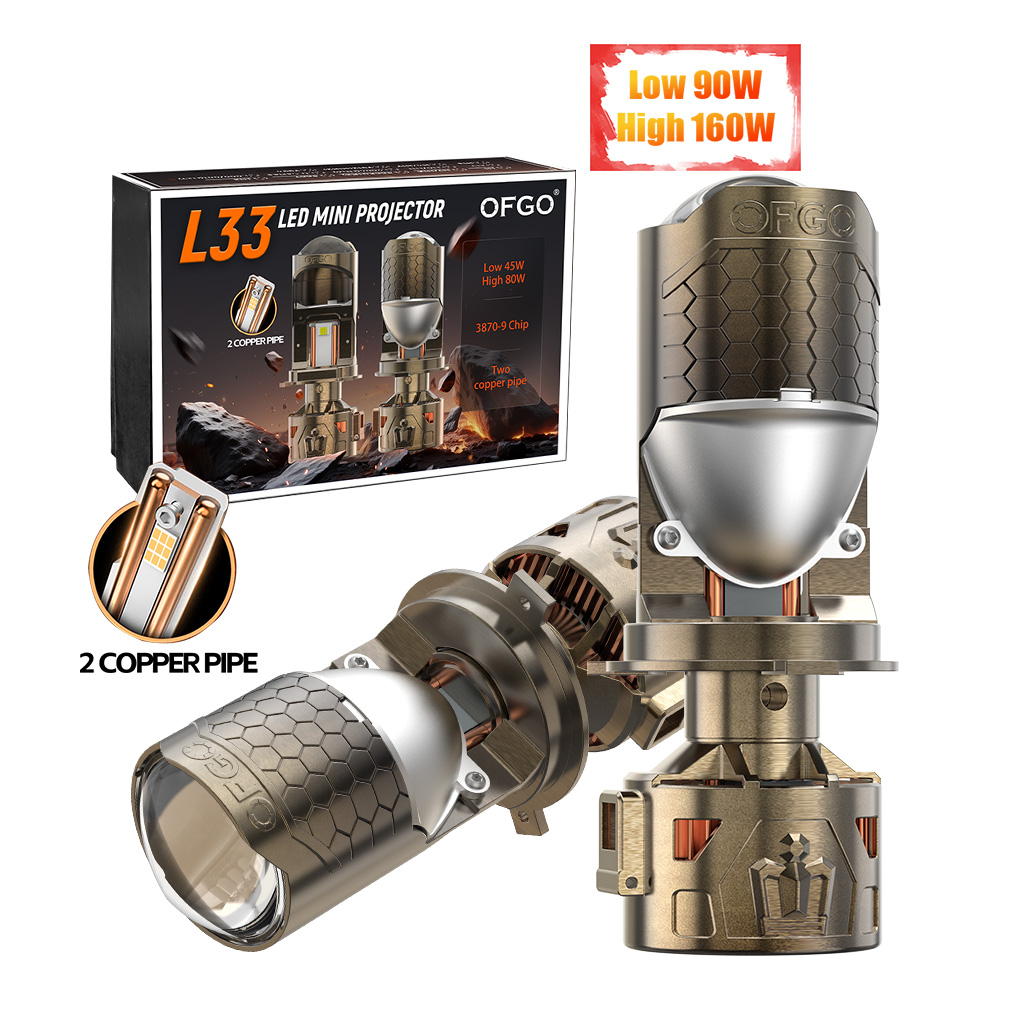
Choosing the right H4 LED headlight bulb can be challenging. When shopping online, you encounter countless options with flashy lumen claims and low prices. However, not all H4 LED bulbs deliver the promised performance. Some provide poor beam patterns, overheat quickly, or fail within months. Based on years of manufacturing experience and real-world testing, this guide helps you separate high-quality H4 LED products from low-quality ones through five essential checks.
Brightness: Focus on Usable Lumens, Not Inflated Numbers
The most common trap when buying an H4 LED is falling for exaggerated lumen claims. Many low-quality bulbs advertise “50,000 lumens” or “100,000 lumens”—numbers that are physically impossible for a standard automotive LED headlight. A typical halogen H4 bulb produces approximately 700 to 1,500 lumens per bulb. High-quality H4 LED bulbs typically deliver 3,000 to 10,000 lumens per pair, which provides 200% to 600% more brightness than halogen while maintaining proper beam control.
So how do you evaluate real brightness? Look beyond the advertised numbers and check the actual wattage and chip configuration. A genuine high-quality H4 LED usually consumes 30W to 60W per bulb with efficient LED chips. Low-quality products often use underpowered chips but inflate lumen claims through marketing tricks. More importantly, usable brightness depends on how well the bulb focuses light onto the road. A high-quality H4 LED delivers concentrated illumination where you need it—down the road for high beams and a wide, even spread for low beams—rather than scattering light everywhere.
In our manufacturing experience at REDSEA, we focus on achieving consistent lumen output that matches real-world driving needs. Our flagship T Glory series represents the highest configuration LED headlight bulb on the market, engineered with advanced chips to deliver exceptional brightness while maintaining precise beam control. A good rule of thumb: if the lumen claims sound too good to be true, they probably are. Reputable manufacturers provide realistic specifications and stand behind their products with warranties ranging from 12 to 24 months.
Beam Pattern: The Cutoff Line Reveals Everything
Brightness means nothing if the light goes in the wrong direction. The most critical quality indicator for any H4 LED is its beam pattern accuracy. H4 bulbs serve dual-beam functions—both low beam and high beam in a single unit. A properly designed H4 LED must align its LED chips exactly where the original halogen filament was positioned. This precision ensures a correct beam pattern and sharp cutoff line for low beam while projecting strong high beams, minimizing glare for oncoming traffic.
How can you spot a low-quality H4 LED? Look at the bulb’s physical design. Cheap bulbs often use oversized LED chips or place them at incorrect positions, resulting in a scattered, unfocused beam with no clear cutoff line. When installed, these bulbs create excessive glare that blinds other drivers and provides poor road illumination for yourself. Some low-quality products may even produce dark spots or uneven lighting.
A high-quality H4 LED, by contrast, produces a well-defined cutoff line—that sharp horizontal line where the low beam ends and darkness begins. According to ECE R112 and SAE J580 standards, a proper low beam should have a clear cutoff to prevent upward scattered light, reducing glare by over 50% compared to poorly designed bulbs. Premium H4 LEDs also feature adjustable bases that allow 360-degree rotation, enabling you to fine-tune the beam alignment for your specific vehicle housing. This adjustability is a hallmark of quality construction.
In our production process, each H4 LED undergoes beam pattern validation to ensure compatibility with both reflector and projector housings. We understand that different vehicles have different headlight designs, so proper beam alignment is non-negotiable for safety and performance.
Cooling System: The Hidden Factor That Determines Lifespan
Heat management separates long-lasting H4 LEDs from those that fail after a few months. LED chips generate significant heat during operation. Without effective cooling, high temperatures cause the chips to degrade rapidly, leading to dimming, color shifting, and eventual failure. This is why examining the cooling system is essential when distinguishing quality levels.
Low-quality H4 LEDs often cut corners on thermal management. Some use tiny, noisy fans that fail within months. Others rely on inadequate aluminum heat sinks that cannot dissipate heat effectively, especially in confined headlight housings. The result? The bulb overheats, brightness drops significantly (often by 30% or more within the first year), and lifespan shortens dramatically.
High-quality H4 LEDs employ robust cooling solutions. Many premium products use fanless designs with aviation-grade aluminum heat sinks and copper cooling braids. Fanless systems eliminate moving parts, which means zero maintenance, silent operation, and complete weather resistance. Advanced thermal separation technology attaches LED chips directly to the bulb shaft, increasing surface area for heat dissipation and ensuring reliable performance even in extreme conditions.
Some manufacturers combine multiple cooling methods—such as copper substrates, heat pipes, and high-speed fans—to maintain optimal operating temperatures. A well-cooled H4 LED will maintain consistent brightness throughout its lifespan, which typically reaches 30,000 to 50,000 hours. When inspecting a product, look for detailed cooling specifications. Genuine quality is reflected in thoughtful thermal engineering, not just attractive pricing.
At REDSEA, our R&D team with over six years of experience has developed advanced thermal solutions that balance performance and reliability. Our products are engineered to withstand continuous operation without thermal degradation, ensuring that your investment delivers long-term value.
LED Chip Technology: CSP and Flip Chip Make the Difference
The heart of any H4 LED is its chip technology. Not all LED chips are created equal, and understanding the differences helps you identify genuine quality. Two advanced technologies dominate the premium segment: Flip Chip and Chip Scale Package (CSP).
Traditional LED chips require wire bonding—tiny gold wires connecting the chip to the circuit board. These wires can break due to vibration or thermal cycling, causing premature failure. Flip Chip technology eliminates these wires by soldering the chip directly to the substrate. This design provides better electrical properties, larger light-emitting area, and superior thermal performance compared to traditional wire-bonded chips.
CSP takes this further by removing the traditional plastic reflector cup and metal leads entirely. CSP LEDs use Flip Chip technology with pads that connect directly to the circuit board, resulting in a package size only 1.2 times the chip size itself. This compact design offers multiple advantages: lower thermal resistance, better heat dissipation, and more uniform light distribution. CSP LEDs can emit light from five sides since there is no plastic cup blocking the beam, providing wider and smoother illumination.
Low-quality H4 LEDs typically use outdated chip technologies with wire bonding and cheap packaging materials. These chips produce lower light output per watt, degrade faster under heat, and have shorter lifespans. When evaluating an H4 LED, look for products that specify Flip Chip or CSP technology. Reputable manufacturers highlight these advanced features because they represent genuine engineering investment.
In our product development, we prioritize advanced chip solutions that maximize both brightness and reliability. The T Glory series incorporates top-tier chip configurations, reflecting our commitment to technological excellence since our founding in 2010.
Certifications and Manufacturer Transparency: Trust Through Verification
The final and perhaps most important indicator of quality is certification and manufacturer transparency. High-quality H4 LEDs come with verifiable certifications from recognized authorities. For European markets, look for ECE approval (particularly R10 for electromagnetic compatibility and R112 for performance). For the United States, DOT certification affirms that headlights meet Federal Motor Vehicle Safety Standards (FMVSS 108), providing legal proof for road use. Additional certifications like RoHS (restriction of hazardous substances) and ISO 9001 for quality management further demonstrate manufacturing credibility.
Low-quality products often make vague claims like “DOT compliant” or “meets ECE standards” without providing actual certification documentation. Some even counterfeit certification marks. Always request third-party test reports from reputable labs such as TÜV or SGS to verify compliance.
Manufacturer transparency is equally important. A reputable manufacturer will clearly disclose:
- ● Company background (years in operation, R&D capabilities)
- ● Factory location and scale
- ● Warranty terms (12 to 24 months is standard for quality products)
- ● Return and replacement policies
- ● OEM/ODM service availability
REDSEA, for example, operates an 11,100+ square meter processing workshop and exports to over 74 countries. We offer warranties ranging from 12 to 24 months depending on the product, and our replacement process is straightforward—simply share a photo or video confirming the issue. We also provide necessary certificates based on product and market requirements.
Be cautious of sellers who cannot provide concrete answers about their manufacturing background or certification status. A lack of transparency often indicates low quality or counterfeit products. Legitimate manufacturers welcome verification and proudly share their credentials.
Conclusion
Distinguishing high-quality H4 LED from low-quality ones requires attention to five key areas: realistic brightness specifications, accurate beam pattern with proper cutoff line, effective cooling system, advanced chip technology (Flip Chip or CSP), and verifiable certifications with transparent manufacturer information. While price is often a consideration, remember that a high-quality H4 LED is an investment in safety—your ability to see clearly at night and avoid blinding other drivers. By applying these checks, you can confidently choose an H4 LED that delivers reliable performance, long lifespan, and genuine value for your driving needs.
Table of Contents
- Brightness: Focus on Usable Lumens, Not Inflated Numbers
- Beam Pattern: The Cutoff Line Reveals Everything
- Cooling System: The Hidden Factor That Determines Lifespan
- LED Chip Technology: CSP and Flip Chip Make the Difference
- Certifications and Manufacturer Transparency: Trust Through Verification
- Conclusion