
 EN
EN
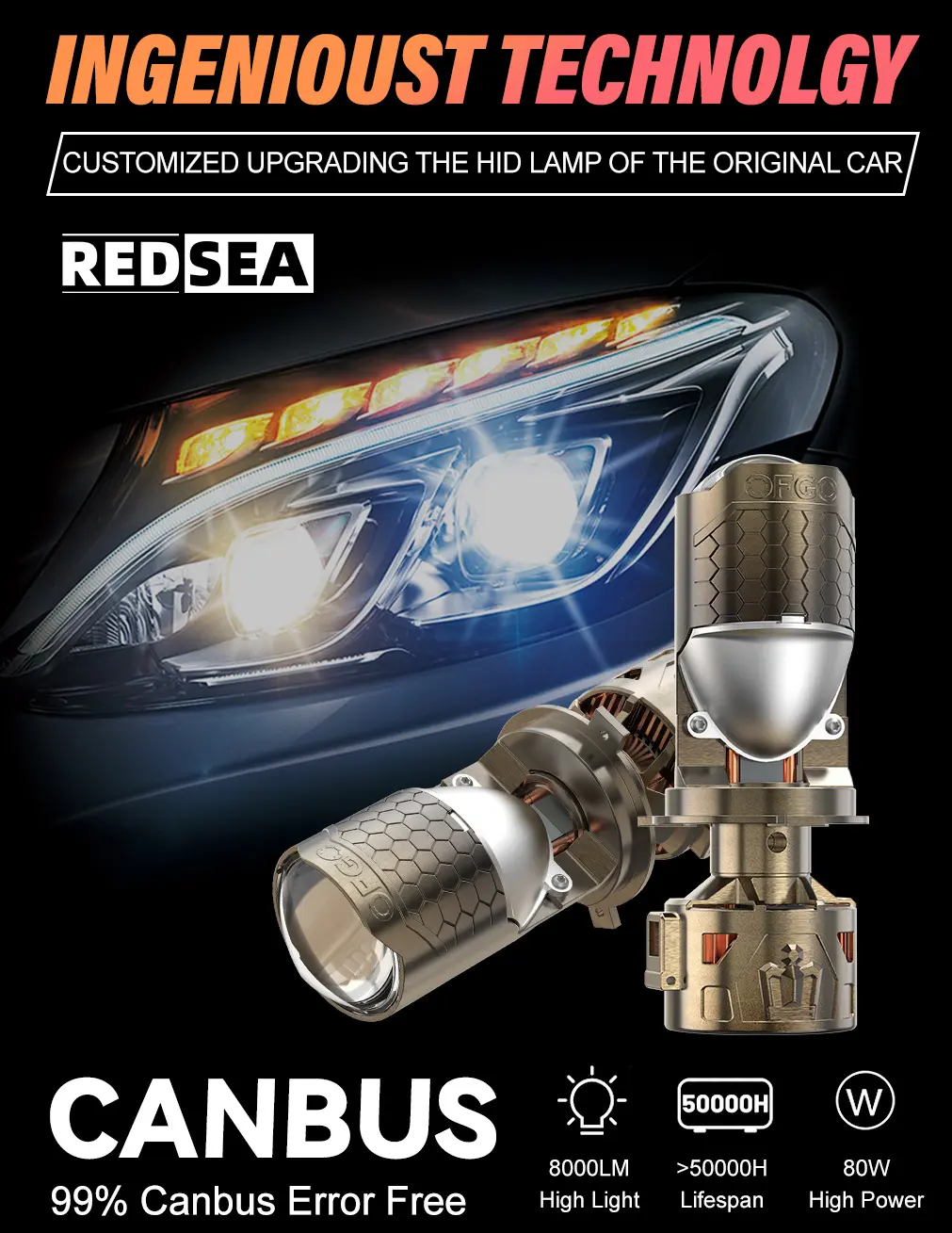
When driving in regions characterized by heavy rainfall, mist, or dense fog, the choice of automotive lighting becomes a critical safety factor. The h4 led 4300k bulb has gained significant traction among drivers who frequently face these challenging atmospheric conditions. Unlike the cool white or bluish tints of 6000K or 6500K LEDs, the 4300K spectrum emits a "warm white" light that closely mimics natural sunlight. This specific color temperature is engineered to provide a balance between modern LED efficiency and the high-penetration capabilities required for low-visibility environments.
Understanding Light Penetration and the Physics of Color Temperature
The effectiveness of an h4 led 4300k in the rain is rooted in the physics of light scattering. High-frequency light (shorter wavelengths, such as blue/cool white) tends to reflect off water droplets, creating a "glare wall" that can blind the driver. In contrast, the 4300K warm white light has a longer wavelength. This allows the beam to cut through raindrops and fog rather than reflecting back into the driver's eyes. From a technical engineering perspective, this reduces visual fatigue and improves the "throw" of the beam on wet asphalt, which typically absorbs darker, cooler light. By utilizing a 4300K setup, drivers maintain a clearer view of road markings and potential hazards that would otherwise be obscured by the shimmering reflection of cooler LEDs.
Real-World Performance and Technical Stability of H4 LED Systems
Based on field testing and installation feedback, the h4 led 4300k provides a distinct advantage in terms of depth perception. In heavy rain, the human eye struggles to distinguish contrast when using pure white light. The warm tint of the 4300K spectrum highlights the textures of the road more effectively. Furthermore, high-quality H4 LED units, such as those featured in our product lineup, are designed with advanced heat dissipation systems. This ensures that the lumen output remains stable even during long drives in humid conditions. The integration of high-grade COB or CSP chips allows for a precise beam pattern that matches the original halogen filament position, preventing light scatter and ensuring that the increased brightness is directed exactly where it is needed—on the road surface.
Comparative Analysis: 4300K vs. 6000K in Adverse Conditions
While 6000K LED bulbs are popular for their "modern" aesthetic and high brightness in clear weather, they often fail the performance test in wet climates. During a downpour, the high blue-light content of 6000K bulbs causes significant backscatter. Experience shows that switching to an h4 led 4300k can improve visibility distance by up to 30% in rainy conditions compared to cooler alternatives. This is not just about brightness, but about "usable light." The 4300K color temperature falls into the "golden zone" of the visible spectrum, providing high CRI (Color Rendering Index) values. This means objects appear in their true colors, allowing the driver to react faster to obstacles, pedestrians, or debris on the road during a storm.
Reliability, Waterproofing, and Long-Term Maintenance
For drivers in rainy regions, the physical durability of the bulb is just as important as the light color. A premium h4 led 4300k assembly must feature a high IP rating (such as IP65 or IP67) to prevent moisture ingress. Our products emphasize a sealed design and aviation-grade aluminum housing to withstand the thermal cycles of operation in cold, wet environments. The plug-and-play nature of the H4 housing ensures a tight seal with the vehicle's original dust cover. By choosing a 4300K LED, you are opting for a solution that combines the longevity of LED technology—often exceeding 30,000 hours of service—with the practical, safety-first performance of traditional all-weather lighting.
Ensuring Safety and Compliance Through Proper Beam Alignment
Finally, the transition to h4 led 4300k must be accompanied by proper headlight aiming. Even the best color temperature will be ineffective if the light is aimed too high or too low. Because the H4 bulb serves both high and low beam functions, the internal shielding of the LED must be precise. A well-engineered 4300K LED will produce a sharp cut-off line, ensuring that you do not dazzle oncoming traffic—a common issue when light reflects off wet road surfaces. By prioritizing transparency and technical accuracy in your lighting choice, you ensure a safer driving experience for yourself and others. The h4 led 4300k remains one of the most recommended upgrades for B2B clients and individual drivers looking for reliable, high-penetration automotive lighting solutions.
Table of Contents
- Understanding Light Penetration and the Physics of Color Temperature
- Real-World Performance and Technical Stability of H4 LED Systems
- Comparative Analysis: 4300K vs. 6000K in Adverse Conditions
- Reliability, Waterproofing, and Long-Term Maintenance
- Ensuring Safety and Compliance Through Proper Beam Alignment