
 EN
EN
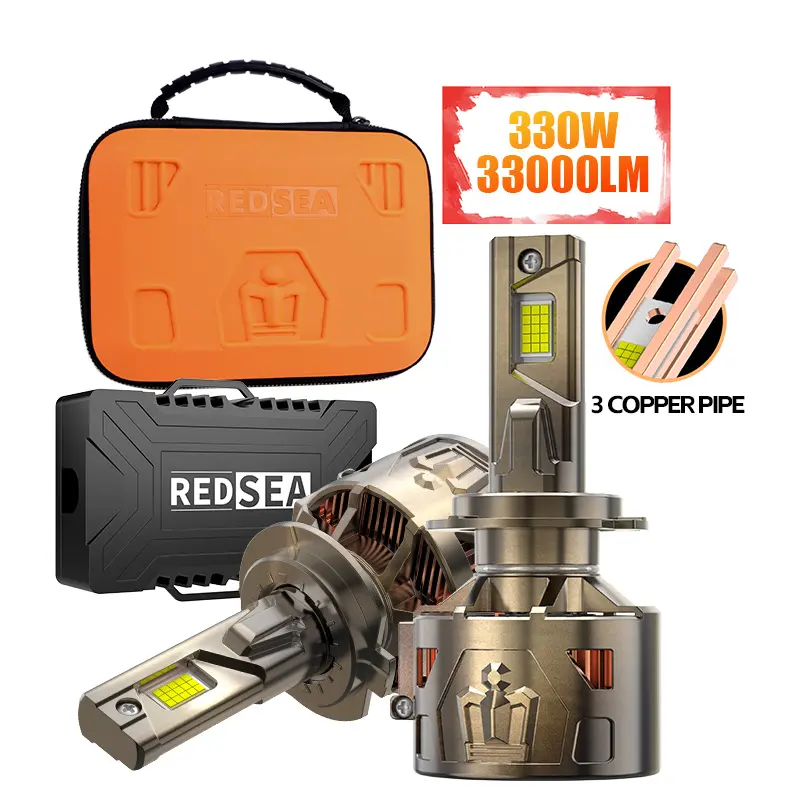
Why Delivery Timeliness Matters When Sourcing LED Car Lights
For importers, auto parts distributors, and retail chains sourcing luces LED para carro from overseas manufacturers, delivery timeliness is not a secondary concern — it is a core business variable that directly affects inventory planning, customer satisfaction, and cash flow. A supplier who ships two weeks late may cause a retailer to miss a seasonal sales window, while a supplier who delivers reliably on schedule allows the buyer to operate with leaner inventory and lower warehousing costs. This article provides a structured approach for evaluating and confirming the delivery timeliness of a luces LED para carro supplier before placing a purchase order, drawing on practical procurement practices used in the automotive lighting industry.
Evaluating Production Lead Times and Capacity Transparency
The first indicator of delivery reliability is the supplier's willingness and ability to provide detailed lead time breakdowns. A professional luces LED para carro supplier should be able to specify how many days are required for raw material procurement, how many days for each production stage, and how many days for quality inspection and packaging before the goods are ready for shipment. For example, Dongguan-based manufacturers such as Dongguan Tongying Technology, which produces LED headlight models including H1, H4, H7, H11, and 9005, typically communicate that raw material procurement requires approximately 15 days — a figure that buyers can use as a baseline when comparing supplier timelines. If a supplier cannot break down their lead time into these component stages, or offers an unrealistically short total lead time without explaining how each stage is completed, it may indicate either over-optimistic quoting or a lack of production planning discipline.
Verifying Production Capacity Against Order Volume
A luces LED para carro supplier with 11 to 50 production workers and a monthly output capacity must manage workflow to meet delivery commitments across multiple orders simultaneously. Buyers should assess whether the supplier's claimed production capacity matches the order volume being negotiated. A useful approach is to ask the supplier to confirm how many production lines are currently active, what percentage of monthly capacity the buyer's order represents, and whether there are other large orders in the queue that could delay the buyer's shipment. Manufacturing facilities with documented quality management systems, such as those holding ISO 9000 certification, typically maintain production scheduling records that allow them to give buyers realistic completion dates rather than optimistic promises.
Requesting a Production Timeline with Milestone Confirmations
Rather than accepting a single delivery date, experienced buyers request a production timeline broken into milestones: raw material arrival confirmation, production start notification, first article inspection report, production completion notice, and final shipment readiness confirmation. For each milestone, the buyer and supplier should agree on a communication method — whether email, instant message, or a shared production tracking platform. A luces LED para carro supplier that resists providing milestone updates may lack the internal tracking systems to guarantee on-time delivery. Suppliers that proactively send milestone updates, even when there are minor delays, demonstrate the transparency that supports long-term sourcing relationships.
Assessing Logistics Arrangements and Shipping Mode Options
Production completion is only half of the delivery equation. The shipping method — whether sea freight, air freight, or express courier — dramatically affects total delivery time and cost. A luces LED para carro supplier located in Dongguan, for example, benefits from proximity to major Chinese export ports such as Shenzhen (Yantian/Shekou) and Guangzhou (Nansha), which offer frequent sailings to destinations in Latin America, Europe, and North America. Sea freight from these ports to major Latin American destinations typically requires 25 to 40 days depending on the specific port pair, while air freight can reduce this to 5 to 10 days at a higher cost per kilogram. Buyers should confirm that the supplier can arrange shipping through the port and carrier the buyer prefers, and should request the estimated transit time for each shipping option along with the corresponding cost.
Requesting Documentation That Supports Delivery Commitments
To move beyond verbal assurances, buyers can request several types of documentation from a luces LED para carro supplier. A past shipment tracking record — showing recent orders shipped to buyers in the same or nearby country — provides concrete evidence of delivery performance rather than relying on sales claims. Production capacity certificates, quality management system certifications, and export licenses further indicate that the supplier is a legitimate manufacturer rather than a trading company with less control over production schedules. For instance, Dongguan Tongying Technology holds RoHS material compliance certification and ISO 9000 quality management certification, documents that signal the presence of systematic production planning — a precondition for consistent delivery performance.
Building Delivery Reliability into the Purchase Contract
Even with thorough evaluation, the purchase contract serves as the final safeguard. Buyers should include specific clauses addressing delivery: explicit shipment date with a tolerance window, penalties or compensation for late delivery, and the right to cancel if a delay exceeds a defined threshold. A reputable luces LED para carro supplier will not object to reasonable delivery clauses, as their confidence in meeting deadlines should be reflected in their willingness to accept contractual accountability. Suppliers that resist any form of delivery guarantee in the contract may be signaling that their delivery promises are aspirational rather than operational.
Table of Contents
- Why Delivery Timeliness Matters When Sourcing LED Car Lights
- Evaluating Production Lead Times and Capacity Transparency
- Verifying Production Capacity Against Order Volume
- Requesting a Production Timeline with Milestone Confirmations
- Assessing Logistics Arrangements and Shipping Mode Options
- Requesting Documentation That Supports Delivery Commitments
- Building Delivery Reliability into the Purchase Contract
