EN
EN
Quick Links
Introduction
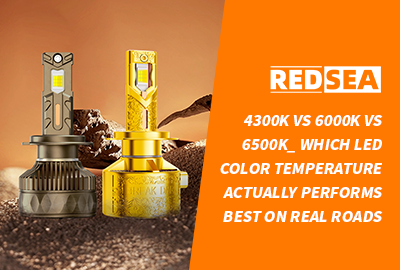
Color temperature is one of the most decisive factors affecting real-road LED headlight performance, yet it is widely misunderstood by global car owners and aftermarket buyers. Most users assume higher Kelvin values mean brighter, better lighting, blindly choosing 6500K cool white bulbs for a modern visual look. In actual road conditions, however, ultra-high color temperature often leads to poor weather penetration, eye fatigue, and scattered light glare.
The three most mainstream LED headlight color temperatures on the market are4300K warm white, 6000K pure white, and 6500K cool white. Each delivers unique lighting effects and adapts to distinct driving scenarios. This SEO-focused guide professionally compares their practical performance in clear nights, rainy, foggy, and snowy weather, helping users select the optimal color temperature for daily commuting, highway travel, and all-weather driving. We also illustrate how REDSEA’s precision color temperature calibration solves the shortcomings of single-color bulbs and balances beauty and practicality perfectly.
1. Basic Overview of 4300K / 6000K / 6500K LED Color Temperatures
Color temperature (Kelvin, K) defines the tone of light emitted by LED bulbs, directly determining road contrast, weather penetration, and visual comfort. Different from subjective brightness perception, calibrated color temperature focuses on actual driving usability rather than superficial light color.
2. Real-Road Performance Comparison by Scenario
2.1 Clear Night Driving
6000K > 6500K > 4300K
On dry, clear urban and highway roads, pure white and cool white light outperform warm white. The 6000K pure white light provides natural daylight-like vision, enhancing the recognition of road signs, lane lines, and obstacles with moderate contrast and no eye strain during long-distance driving. The 6500K cool white offers higher visual brightness and a more premium lighting appearance, while 4300K appears slightly dimmer in pure visual perception due to its warm tint.
REDSEA 6000K and 6500K bulbs adopt precision color temperature calibration, ensuring uniform light color without color deviation, effectively improving clear-night road clarity and optimizing the overall driving visual experience.
2.2 Rainy, Foggy & Snowy Harsh Weather
4300K > 6000K > 6500K
Weather penetration becomes the core performance indicator in low-visibility conditions. The warm white 4300K light has longer light waves, which can effectively penetrate suspended water mist and fine snow particles in the air, reducing light scattering and forming clear, concentrated road illumination. It avoids blurred vision caused by light reflection on wet road surfaces.
By contrast, 6500K cool white light with short blue-toned light waves is prone to massive scattering in humid air, creating obvious light fog and glare that blurs road outlines and greatly weakens driving safety. 6000K pure white delivers moderate penetration, serving as a balanced alternative for mixed weather scenarios.
2.3 Long-Distance Driving Visual Comfort
4300K ≈ 6000K > 6500K
Long-term exposure to high-blue 6500K cool white light easily causes eye fatigue and dryness, reducing driver concentration. 4300K soft warm white and 6000K natural pure white light feature mild color tones, low blue light stimulation, and high visual tolerance, allowing drivers to maintain stable visual sensitivity during prolonged night driving.
3. Core Pros & Cons of Each Color Temperature
|
Color Temperature |
Core Advantages |
Main Limitations |
Best Application Scenarios |
|
4300K Warm White |
Strong rain/fog/snow penetration, ultra-high visual comfort, low eye fatigue, stable all-weather adaptability |
Slightly lower visual brightness on clear nights, less modern light tone |
Regions with frequent rainy/foggy weather, all-weather daily driving, high-safety priority users |
|
6000K Pure White |
Balanced brightness & penetration, natural daylight tone, no visual distortion, universal for all scenarios |
No extreme advantages in single harsh weather or ultra-clear night conditions |
Global mainstream daily commuting, urban & highway mixed driving, most versatile option |
|
6500K Cool White |
Ultra-high visual brightness, clean cool white tone, premium exterior lighting texture |
Weak bad-weather penetration, high blue-light stimulation, easy eye fatigue |
Dry and clear areas, aesthetic-priority users, pure night road driving |
4. Which Color Temperature Is the Best Choice?
There is no one-size-fits-all best color temperature; the optimal choice depends on local climate, road conditions, and personal driving habits:
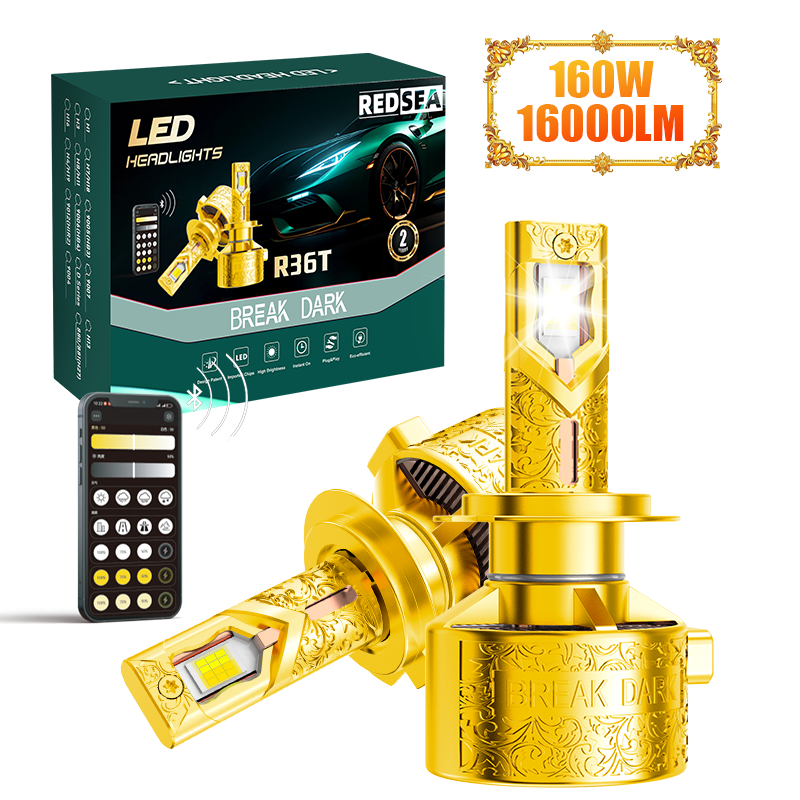
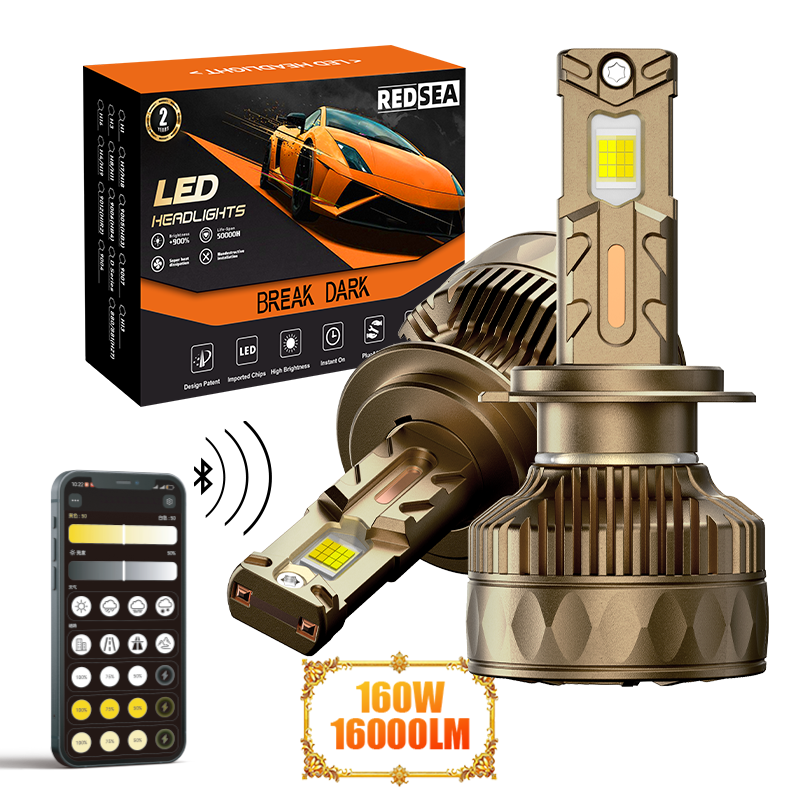
Most conventional LED bulbs feature fixed single or dual color temperature, forcing drivers to compromise between weather penetration and visual aesthetics. To solve this universal upgrade dilemma, REDSEA launches intelligent three-color-temperature models, R11 and R36T. These premium bulbs support full-range color temperature adjustment via smartphone APP, covering 4300K warm white, 6000K pure white, and 6500K cool white in one integrated solution. Users can freely switch and customize the ideal light tone according to real-time weather, road conditions, and personal preferences, achieving truly scenario-adaptive intelligent lighting.For users who prefer fixed color temperature, REDSEA also offers single-color-temperature models in 4300K and 6000K options
5. REDSEA Optimized Color Temperature Solution
Based on global users’ all-scenario driving demands, REDSEA R11 and R36T intelligent LED bulbs adopt precision three-color-temperature calibration and APP intelligent control technology, integrating the strong penetration of 4300K warm white, balanced universal performance of 6000K pure white, and high-definition brightness of 6500K cool white. The flexible adjustable design realizes one-bulb multi-scene adaptation, solving the performance bottleneck of single fixed-color bulbs.
Conclusion
4300K, 6000K, and 6500K color temperatures have their own unique advantages and applicable scenarios. 4300K leads in harsh weather penetration and visual comfort; 6000K is the most balanced universal option for daily driving; 6500K excels in clear-night brightness and aesthetic performance. Blindly pursuing ultra-high color temperature will sacrifice driving safety in complex weather.
REDSEA R11 and R36T intelligent three-color-temperature LED bulbs completely break the performance limitations of ordinary fixed-color bulbs. With precision optical calibration, stable hardware configuration, and smart APP adjustable design, they seamlessly switch among professional penetration, daily balanced lighting, and high-definition aesthetic lighting. This intelligent upgrade solution perfectly adapts to global diverse climates and road conditions, providing users with safer, more comfortable, and highly personalized automotive lighting experiences.

Dongguan Red Sea Technology Development Co., Ltd. provides premium LED car headlights, BI-LED & laser lenses for global automotive brands. 15+ years OEM/ODM expertise, strict QC, 2000+ distributors. Contact us today!
Room 501, Building 1, No. 8 Chuangyi East Road, Daojiao Town, Dongguan City, Guangdong Province,523000
Copyright © 2026 by Dongguan Red Sea Technology Development Co., Ltd. Privacy Policy



 Hot News