EN
EN
Quick Links
In recent years, LED headlight bulbs have taken the automotive lighting market by storm, becoming the top choice for countless drivers looking to upgrade their vehicle lighting. From compact sedans to luxury SUVs, LED headlights are almost everywhere. Why are LED headlights so popular? And with so many products on the market, how do you choose the right one? As a professional automotive lighting brand, REDSEA is here to provide all the answers.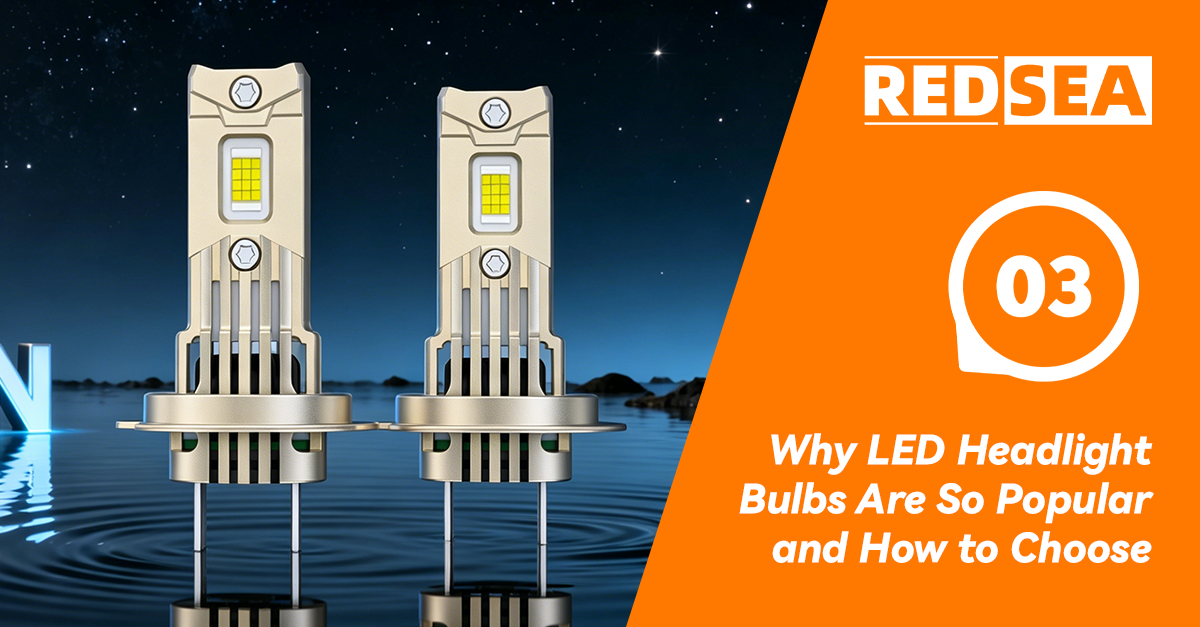
Part 1: Why Are LED Headlight Bulbs So Popular?
1. Ultra-high Brightness for Clearer Vision
Traditional halogen bulbs typically produce around 1000 lumens, while a high-quality LED headlight can deliver 3000–6000 lumens per bulb. Higher light output means you can spot road conditions, pedestrians, or obstacles earlier when driving at night, greatly improving safety. This superior brightness ensures that even in low-light environments or harsh weather such as rain and fog, you can maintain a clear view of the road ahead, reducing the risk of potential accidents.
2. Extremely Long Lifespan – Hassle-free & Cost-effective
Halogen bulbs last about 500 hours, HID bulbs around 2500 hours, while LED headlights are designed to last over 50,000 hours. One installation covers almost the entire life of your vehicle, saving you frequent replacement costs in the long run. Unlike traditional bulbs that require regular checks and replacements, LED headlights are low-maintenance, eliminating the trouble of frequent trips to auto repair shops and reducing unnecessary expenses for car owners.
3. Instant Response – No Warm-up Time
LEDs light up instantly at full brightness with virtually no delay. This is crucial for flashing warnings or brake light responses during emergency braking, giving vehicles behind more reaction time and reducing rear-end collisions. Unlike HID bulbs that need a warm-up period to reach their maximum brightness, LED headlights provide immediate lighting support, which is particularly important in emergency situations where every second counts.
4. Energy-saving & Kind to Your Vehicle’s Electrical System
Compared to halogen bulbs (55W–65W), LED headlights typically consume only 20W–40W while producing much brighter light, cutting energy use by nearly half. Lower power consumption also reduces the load on your alternator and battery – especially beneficial for older vehicles. For new energy vehicles, this energy efficiency further extends the driving range, making LED headlights a more eco-friendly and economical choice.
5. Modern Appearance – Elevates Your Vehicle’s Style
LED light has a pure, clean color temperature (usually 5000K–6000K), close to natural daylight, offering a crisp and premium visual effect. Combined with sleek or aerodynamic housing designs, LED headlights give the front end of your car a highly modern and recognizable look. Whether it’s a compact sedan or a luxury SUV, upgrading to LED headlights can instantly enhance the vehicle’s overall aesthetics, making it stand out on the road.
Part 2: How to Choose the Right LED Headlight Bulbs?
With so many brands and confusing specs on the market, mastering the following five key points will help you make a smart choice.
1. Check the Chip – The Heart of the Light Source
The chip determines brightness, efficiency, and lifespan. Top-tier chip brands include CREE, Lumileds, and OSRAM. REDSEA’s entire LED headlight series uses automotive-grade dual-side high-efficiency chips, delivering precise beam patterns, no dark spots, stable brightness, and minimal light decay. These high-quality chips ensure that the LED headlights maintain consistent performance over time, providing reliable lighting for your drives.
2. Check the Heat Dissipation – The Key to Longevity
LEDs hate heat; poor heat dissipation leads to light decay or even burnout. Heat dissipation systems fall into three types:
Prioritize models with temperature protection and smart speed-control fans. A reliable heat dissipation system ensures that the LED headlights can work stably for a long time, avoiding premature failure due to overheating.
3. Check the Beam Pattern – No Glare, No Scatter
Low-quality LED bulbs misalign the light source position compared to the original halogen filament, resulting in messy beam patterns and light leakage above the cutoff line – dangerously glaring for oncoming traffic. A good LED headlight should:
4. Check Color Temperature & Lumens
Color temperature – Recommended range: 4000K–6000K. 4300K gives a slightly yellow tint for better fog/rain penetration; 5000K–6000K offers pure white light, comfortable and bright; above 6500K turns bluish, reducing visibility in rain and fog.
Lumens – 3000+ lumens per bulb meets daily needs. For extreme performance, choose 4000–6000 lumens per pair. Beware of inflated specs – always look for real tested data. REDSEA’s LED headlights provide accurate lumen data, ensuring that you get the brightness you need without false claims.
5. Check Socket Type & Vehicle Compatibility
Different vehicles use different headlight sockets (e.g., H4, H7, 9005, 9012, etc.). Before buying, confirm your original bulb type and check whether a decoder is required (some German and American cars may show error codes). REDSEA offers a complete socket library and intelligent decoding drivers – plug-and-play, no wire cutting needed. This ensures that the LED headlights can be easily installed without modifying the original vehicle circuit, making the upgrade process simple and hassle-free.
Part 3: Why Choose REDSEA LED Headlights?
As a professional brand dedicated to automotive lighting, REDSEA is committed to “safety, durability, and high efficiency.” Every LED headlight bulb undergoes vibration testing, high-low temperature cycle testing, and beam pattern calibration before leaving the factory. We provide:
Choosing REDSEA means choosing visible safety and trust. Our strict quality control and comprehensive after-sales service ensure that you get a reliable product and a worry-free experience.
Conclusion
LED headlights have become the natural evolution of modern automotive lighting, thanks to their comprehensive advantages in brightness, lifespan, energy efficiency, and appearance. But choosing a great LED headlight isn’t just about specs – it’s about chips, heat dissipation, beam pattern, and brand reputation. We hope this guide helps you make the right decision. Light up the road ahead – start with REDSEA.
 Hot News
Dongguan Red Sea Technology Development Co., Ltd. provides premium LED car headlights, BI-LED & laser lenses for global automotive brands. 15+ years OEM/ODM expertise, strict QC, 2000+ distributors. Contact us today!
Room 501, Building 1, No. 8 Chuangyi East Road, Daojiao Town, Dongguan City, Guangdong Province,523000
Copyright © 2026 by Dongguan Red Sea Technology Development Co., Ltd. Privacy Policy