
 EN
EN
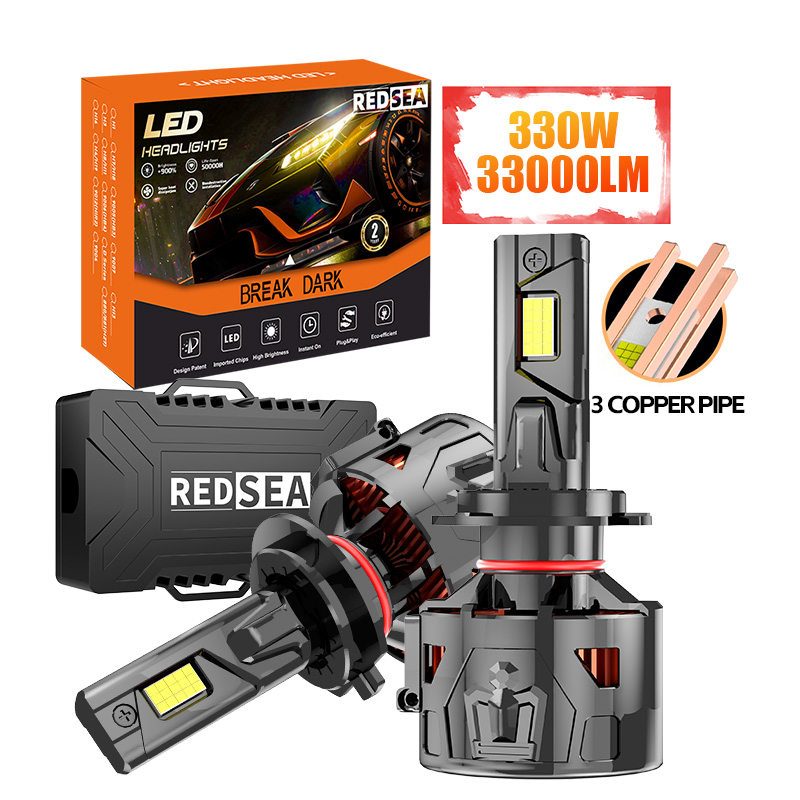
Upgrading your vehicle's lighting is one of the most impactful modifications you can make for safety and aesthetics. However, the market is flooded with options, making it difficult to distinguish between a high-performance component and a cheap imitation. When evaluating a 9006 led light bulb, often used for low beams or fog lights, you must look beyond the flashy packaging. Based on years of hands-on testing and analyzing manufacturing standards at RedSea, I have found that the difference between a bulb that lasts five years and one that fails in five months comes down to thermal management, optical precision, and component integrity. This guide breaks down the essential criteria for judging quality so you can make an informed investment.
Evaluate the Thermal Management System and Heat Dissipation
The greatest enemy of any 9006 led light bulb is heat. Unlike halogen bulbs that radiate heat outward, LEDs generate heat at their base, which must be moved away from the diode to prevent premature "dimming" or total circuit failure. High-quality bulbs utilize an integrated cooling architecture. Look for a vacuum liquid-cooled heat pipe—this technology uses a phase-change cycle to move heat much faster than solid copper alone. Furthermore, the external housing should be crafted from 6063 aviation-grade aluminum, known for its superior thermal conductivity. A premium bulb will also feature a high-speed, silent fan capable of reaching 12,000 RPM. In my experience, bulbs relying solely on passive cooling (heatsinks without fans) often struggle to maintain peak brightness during long night drives, eventually leading to a shorter lifespan.
Analyze the Optical Design and Beam Pattern Precision
A bright bulb is useless if the light is scattered and blinds oncoming traffic. The quality of a 9006 led light bulb is defined by its ability to mimic the filament position of the original halogen bulb. This is often achieved using high-density CSP (Chip Scale Package) or COB chips arranged in a "1:1" ratio. When you examine a bulb, check the thickness of the copper PCB (Printed Circuit Board) holding the chips. A "thin" board design allows the LEDs to be closer together, which results in a more focused beam and a sharp "cut-off line." In professional testing, we look for a beam that illuminates the road's edges without dark spots. If the light pattern is blotchy or lacks a clear center point, the optical alignment is poor, regardless of how many lumens the manufacturer claims.
Inspect the Internal Components and Driver Stability
The "brain" of the 9006 led light bulb is the external or internal intelligent driver. Quality bulbs use a constant current driver with a built-in "Canbus" system to prevent dashboard error codes and flickering. During my time analyzing return rates for various lighting brands, I’ve noticed that most failures occur in the driver rather than the LED chip itself. A high-quality driver should support a wide voltage range (typically 9V to 32V) to handle the electrical surges common in automotive systems. Furthermore, check the IP (Ingress Protection) rating; a professional-grade bulb should be rated at least IP65 or IP67, ensuring it is fully waterproof and dustproof. This ensures that even if your headlight housing has a slight leak or you drive through heavy rain, the electronics remain protected.
Verify Physical Build Quality and Material Integrity
The final step in judging a 9006 led light bulb is a physical inspection. Avoid bulbs made primarily of plastic or thin, stamped metals. Professional-grade bulbs feel substantial because they use die-cast aluminum and high-quality wiring harnesses. Look at the connector—it should fit snugly into the vehicle's factory plug without the need for excessive force or electrical tape. High-quality manufacturers often use a 360-degree adjustable mounting ring, which allows you to rotate the bulb once it is installed to perfectly align the beam pattern with your specific headlight housing. From a practical standpoint, this adjustability is the hallmark of a product designed for enthusiasts and professionals who care about the nuances of light distribution.